
ARE YOU OVER ASSESSED?
“I win because I know what I am doing” — Michael R. Franklin
Across much of Upstate New York the assessment roll has not been updated in years. When a home sells, the assessor often raises its assessment toward the sale price, while the neighbours who did not sell keep their old, lower figures. The new owner ends up carrying a bigger share of the tax bill than the law allows.
You pay nothing unless a reduction is secured.
In most New York towns, Grievance Day — the last day to file with the Board of Assessment Review — is the fourth Tuesday in May. The next one is . Cities and some towns set their own dates (in Syracuse, the last two weeks of January), so check yours — or ask me.
~500 cases
resolved with assessors, Boards of Assessment Review and in SCAR
Former SCAR
Hearing Officer
NYS Unified Court System — 4th and 5th Judicial Districts, 4 years in 6 counties
43 counties
across Upstate New York — every county of the 4th, 5th, 6th and 7th Judicial Districts
Since 2001
valuing Upstate homes — what they list, sell, assess and appraise for; challenging assessments since 2012
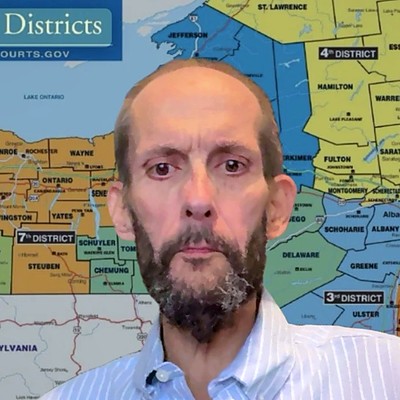
Michael R. FranklinLicensed New York State Real Estate Broker. Residential and commercial assessment challenges. More about me.
Free, no obligation
Get your free analysis
Send me your property and I will calculate whether you are over-assessed — and what you could save — before you decide anything. There is no charge for the analysis, and you pay nothing unless a reduction is secured.
Prefer the phone? Call 315-876-2262. I read every message myself, and the first conversation is always free.
What I do, and how I can help
Read the transcript
I am Mike Franklin, The Property Tax Guy. If you're watching this, there's a good chance you opened your assessment, or your tax bill, and something didn't sit right. Maybe it went up, and nothing about your property changed. Maybe your neighbor pays less for more house. I understand that frustration. And I want you to know, you can do something about it.
Here's what usually happens. Across much of Upstate New York, the assessment roll hasn't been updated in years. When a home sells, the assessor raises it toward the sale price. The neighbors who didn't sell keep their old, lower numbers. So the new owner carries a bigger share of the tax bill than the law allows. It even has a name. Welcome stranger assessing. And New York courts have rejected it.
I know how these cases are decided, because I used to decide them. For four years, I was a Small Claims Assessment Review hearing officer for the New York State court system. Now I sit on your side of the table. I'm a licensed real estate broker, and I've been valuing Upstate New York property since two thousand one.
I've been challenging assessments since twenty twelve. About five hundred cases, resolved with assessors, with Boards of Assessment Review, and in small claims. Forty-three counties so far. And because the process is set by State law, I can take your case anywhere in New York outside the City and Nassau County.
It starts with a free phone call. Then I run a free analysis of your property. I compare your assessment with what your property is worth, and with how the rest of the roll is assessed. That's not my opinion. It's a calculation, and I show you the work. If you're over-assessed, I'll show you what you could save. If you're not, I'll show you exactly why, and it costs you nothing.
If there's a case, we sign a written agreement before anything is filed. Then I prepare your grievance, and I present it to the Board of Assessment Review. For a home, if the Board says no, we go to Small Claims Assessment Review, where an independent hearing officer looks at the evidence fresh. For commercial property, I build the record and work alongside your attorney.
My objective is simple. Get the assessment right. Nothing more, and nothing less, than what the law allows and what's fair. If I find something that cuts the other way, I'll tell you that too. And you pay nothing unless a reduction is secured.
You shouldn't pay more than your fair share. And you don't have to figure this out alone. Call me at three one five, eight seven six, two two six two, or visit The Property Tax Guy dot com. I am Mike Franklin, The Property Tax Guy. Let's look at your numbers.
Where I work
Every county in New York State except New York City and Nassau
Grievances to the Board of Assessment Review and Small Claims Assessment Review are set by State law, so I can take your case wherever your property is — from Chautauqua to Suffolk, from St. Lawrence to Rockland.
- 56 counties
- 1,036 cities, towns and villages that assess
- Every village within them
Click or tap any county on the map to see when its tentative assessment roll comes out and when Grievance Day is.
Got our postcard?
It was built from public records: your sale, your assessment, and the ratio the State publishes for your town. Here is what each number means, and a calculator to check it yourself.
How it works
A free phone call, a free look at your numbers, and a written agreement before anything is filed. Then the grievance, and if needed, Small Claims Assessment Review. The full process and fees.
Why it happens
Reassessing homes because they sold, while leaving the rest of the roll alone, is known as “welcome stranger” assessing. New York courts have rejected it. What the law says.
Free exemption help
STAR, the senior citizens exemption, veterans and disability exemptions: many owners never apply for what they qualify for. Applications are due March 1 in most towns. Ask me, at no charge.
My objective: get the assessment right
I quantitatively and objectively analyze your property. My objective is to get the assessment right — nothing more and nothing less than what is allowed by law and is equitable.
A free analysis of your property
Call or email and I will generate a free analysis of your property.
- If you are over-assessed, I will show you what the potential savings are.
- If you are not over-assessed, I will demonstrate exactly why.
I will not just give you my opinion. I will calculate it for you quantitatively, so you know why you are either over-assessed or not. I can prove to you what the results are and how they were calculated.
Getting it right cuts both ways. If I find an error in your property record that would raise your assessment, I tell you before anything goes to the assessor, and you decide how to proceed.
In my own words: “If a property is over-assessed, I obtain a reduction more than 90% of the time” — largely because I turn down the cases I would not win.
Free monthly newsletter
New York assessment news, first Tuesday of every month
New laws, court decisions, reassessments and the deadlines coming up — in plain English, with the source for every item. See what's in it.